
Why Should I Service My Film Camera?
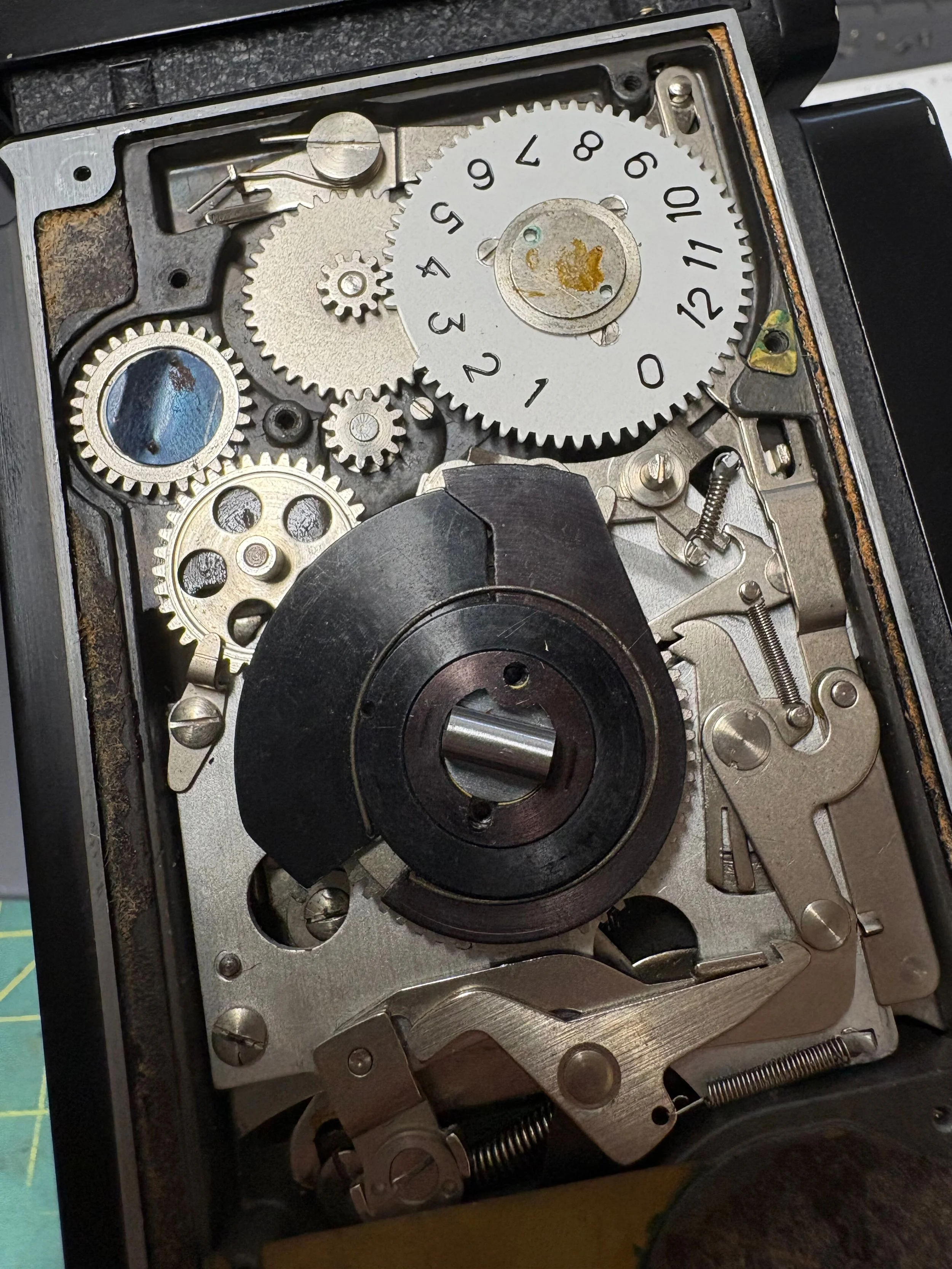
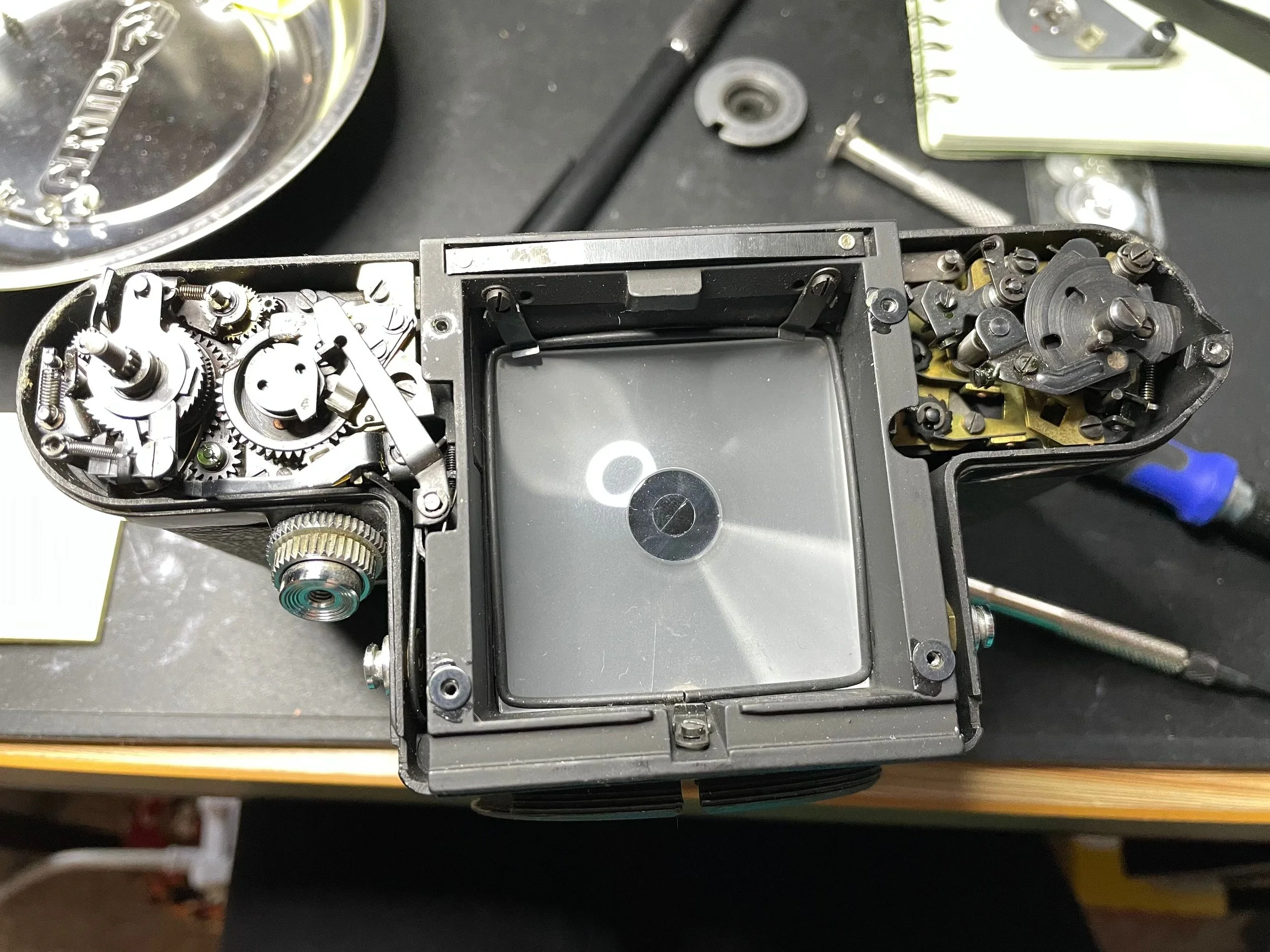
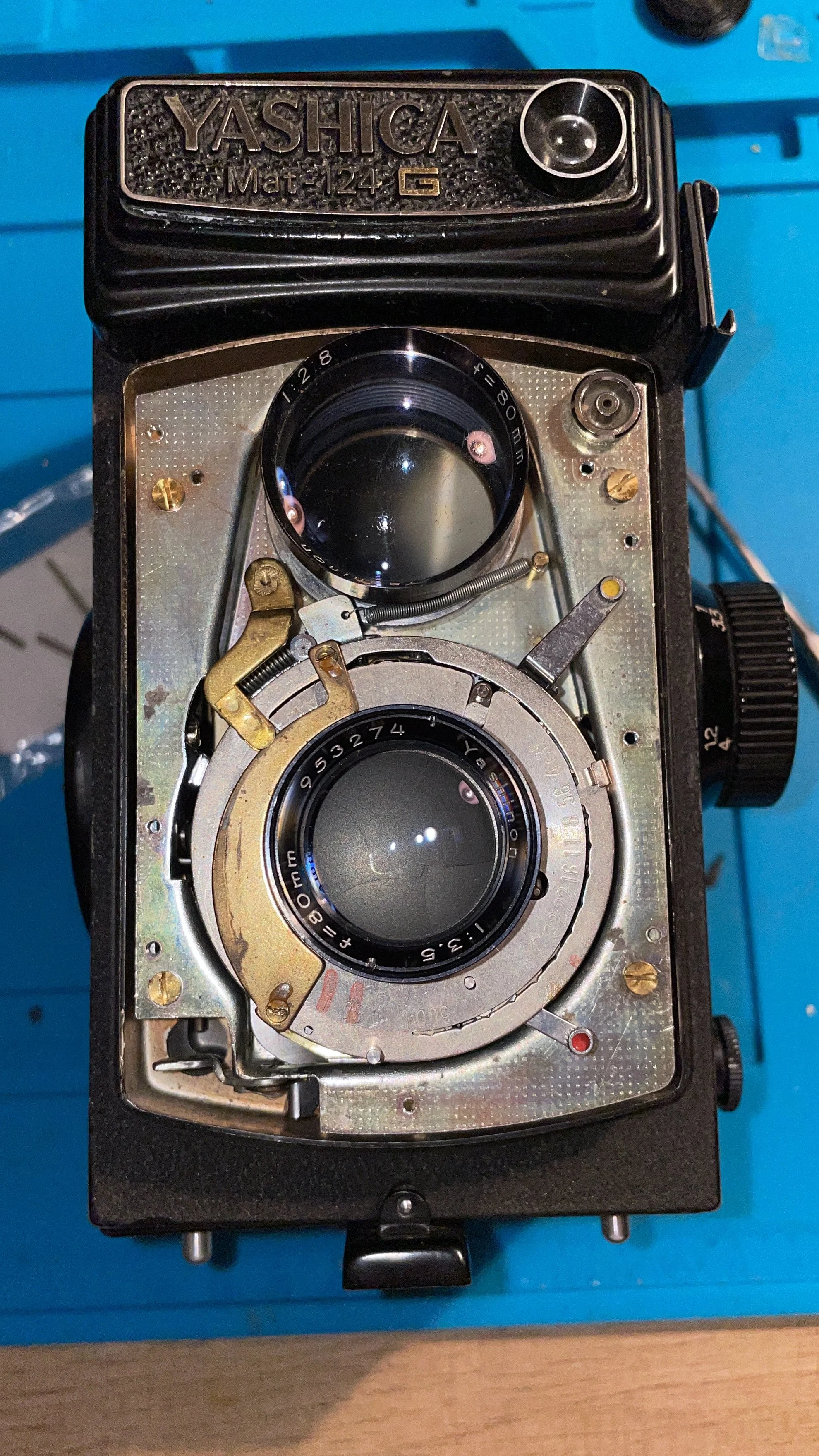
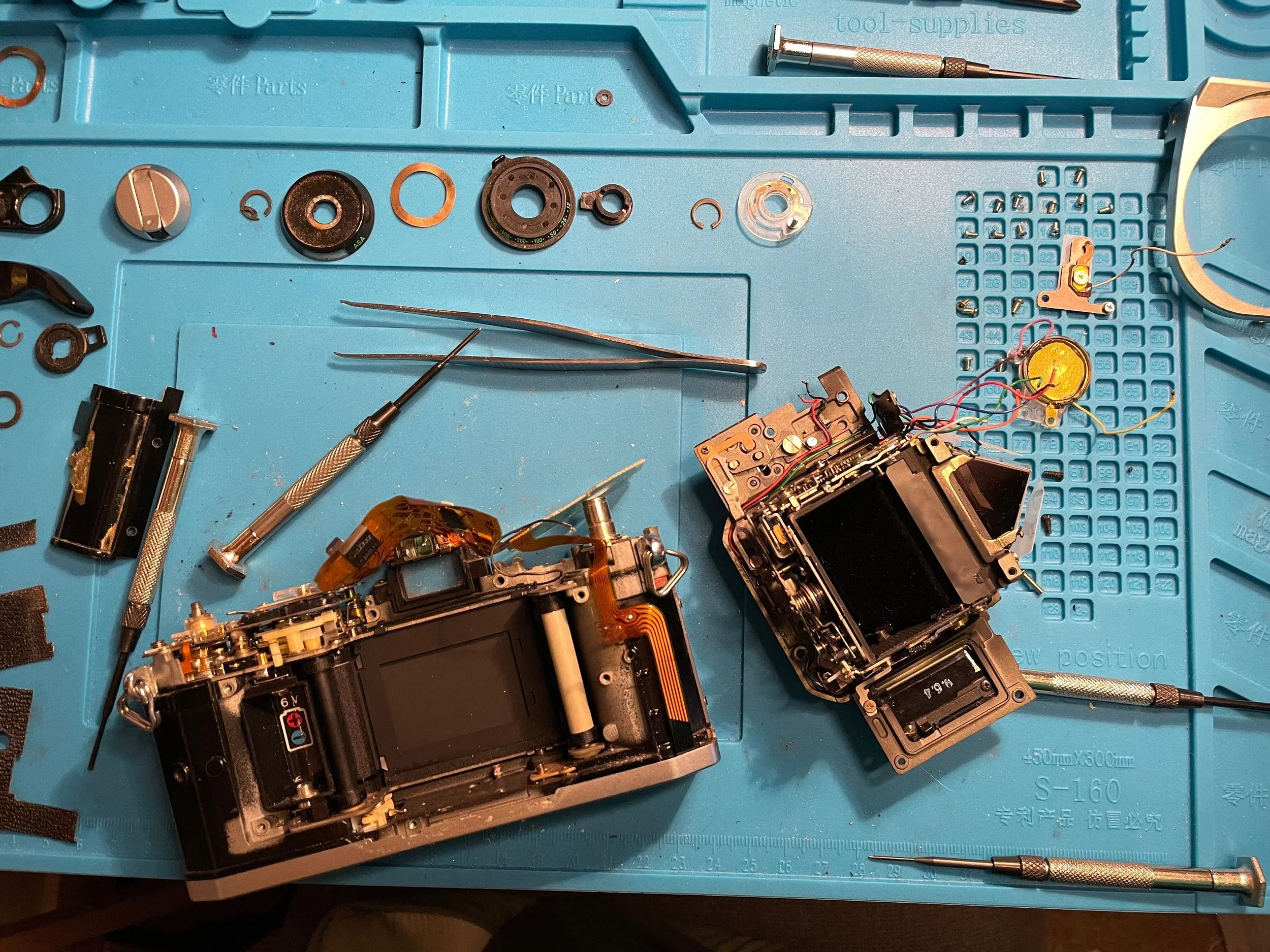
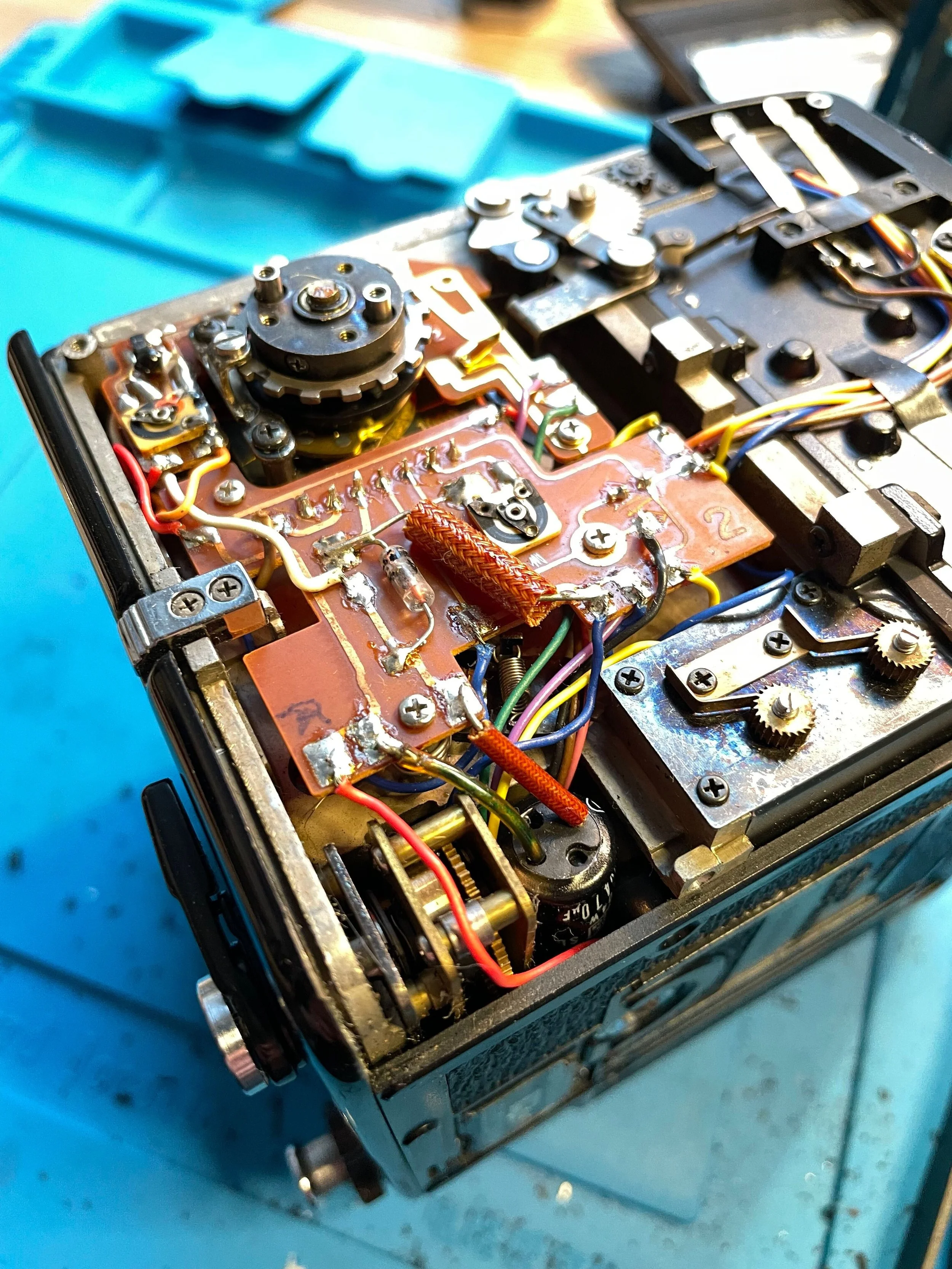
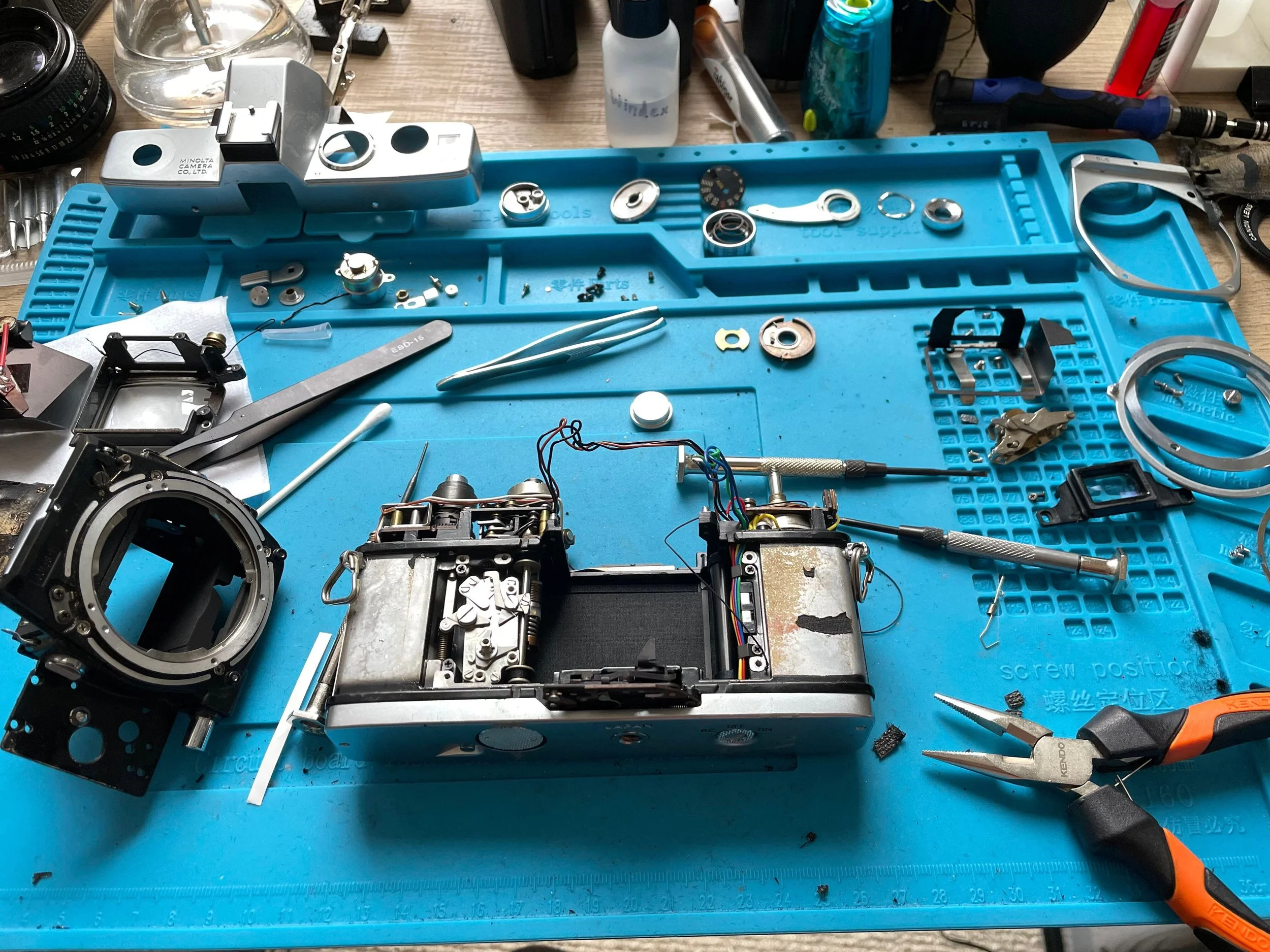
Film cameras are mechanical machines. Inside even a simple camera are dozens of tiny parts working together to control shutter timing, film transport, focusing, and exposure. Springs, gears, levers, bearings, and shutters all move in precise coordination every time a photograph is taken.
Most of the film cameras still in use today were built decades ago. Many have never been serviced since they left the factory. While these cameras were engineered to be durable, time eventually affects every mechanical system.
Servicing a film camera is not simply about fixing something that is broken. It is about restoring the mechanical condition of the camera so it can operate reliably and accurately again.
Aging Lubricants and Mechanical Wear
One of the most common reasons film cameras need service is the condition of the lubricants inside them. Cameras rely on carefully applied oils and greases to allow parts to move smoothly and at the correct speed. Over time these lubricants change.
In older cameras the original oils and greases often dry out, thicken, or break down chemically. When this happens they can turn into a sticky residue that interferes with the movement of internal parts. This often leads to symptoms such as stiff controls, inaccurate shutter speeds, or mechanisms that hesitate or stick during operation.
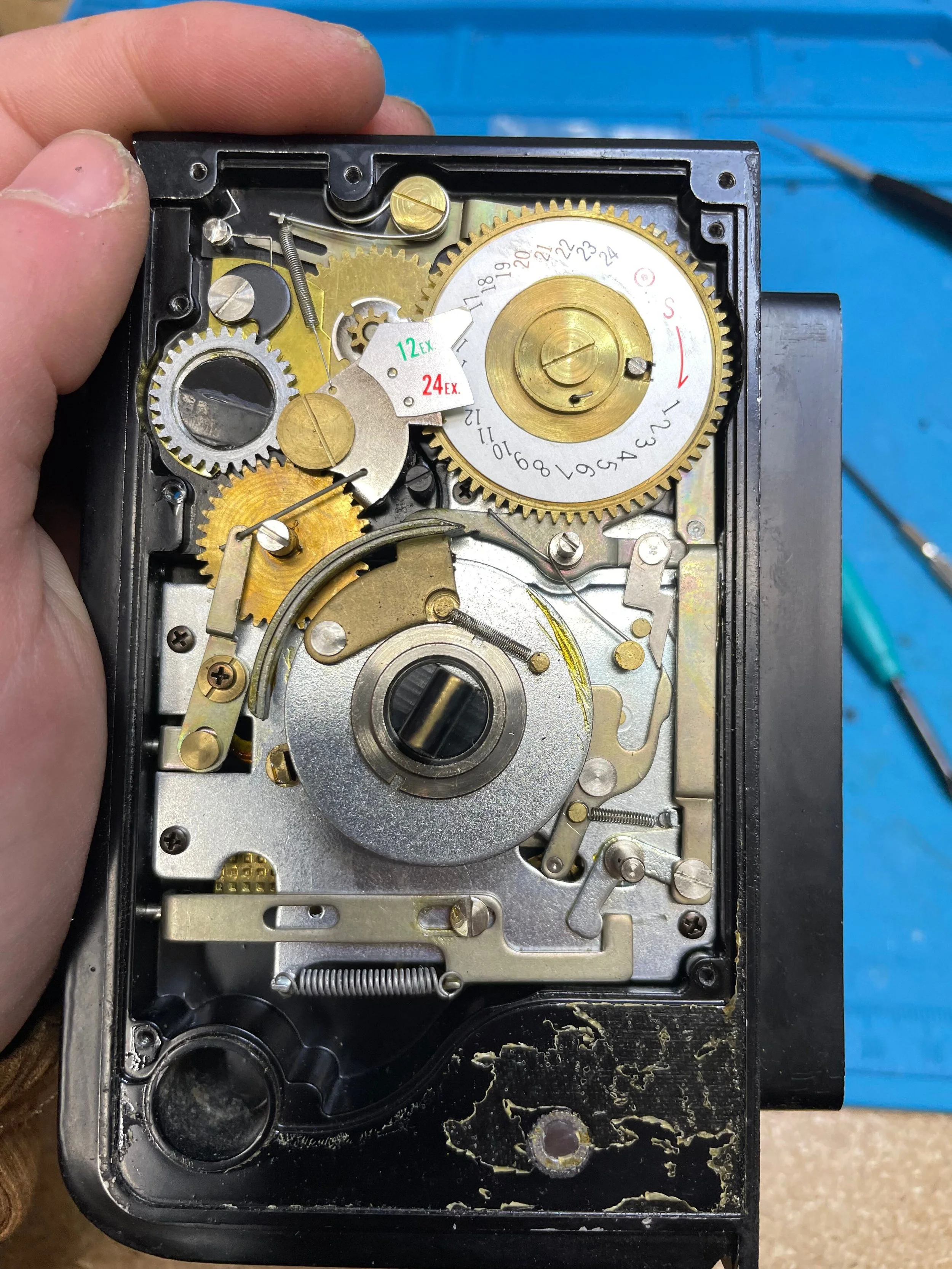
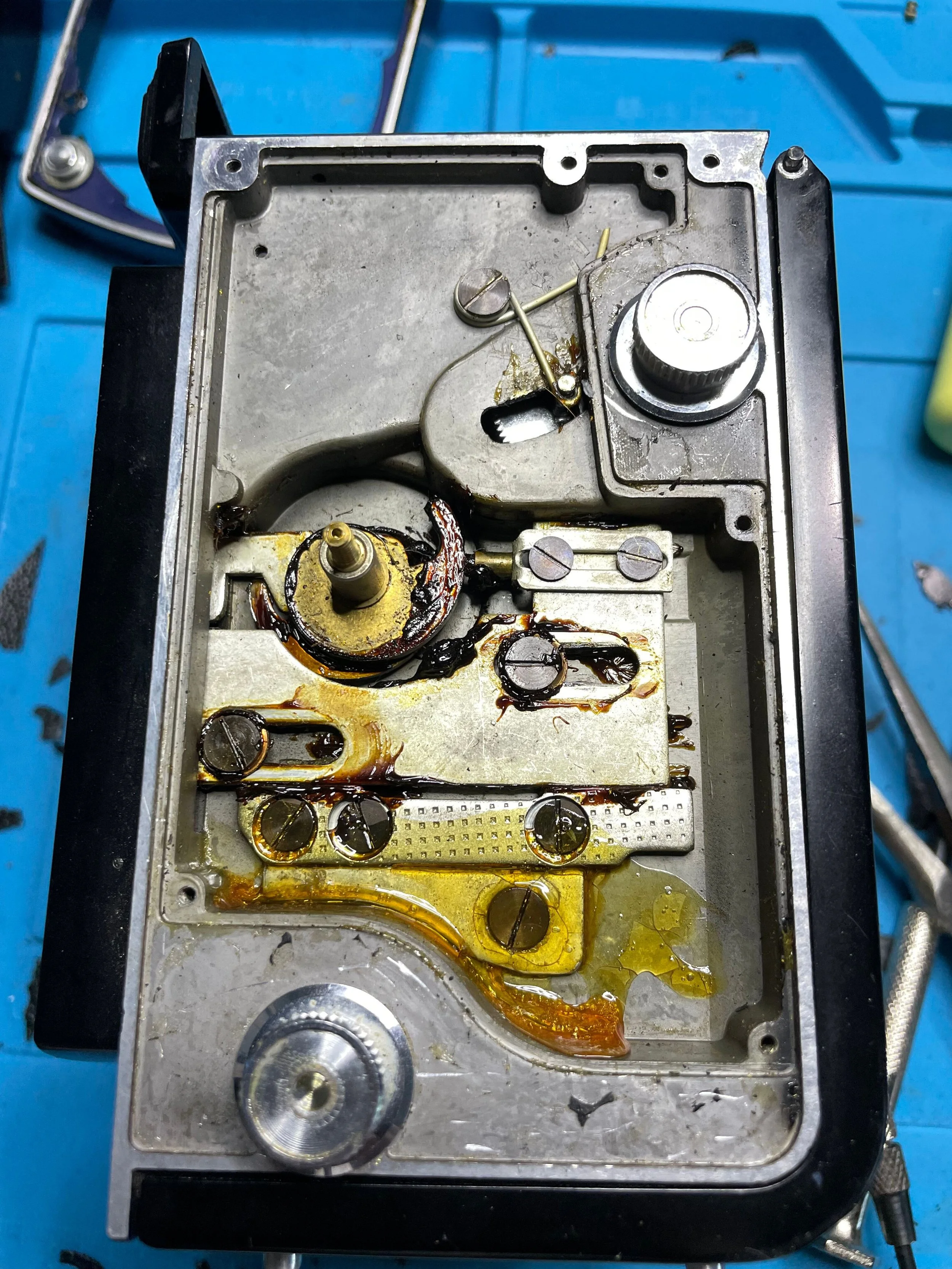
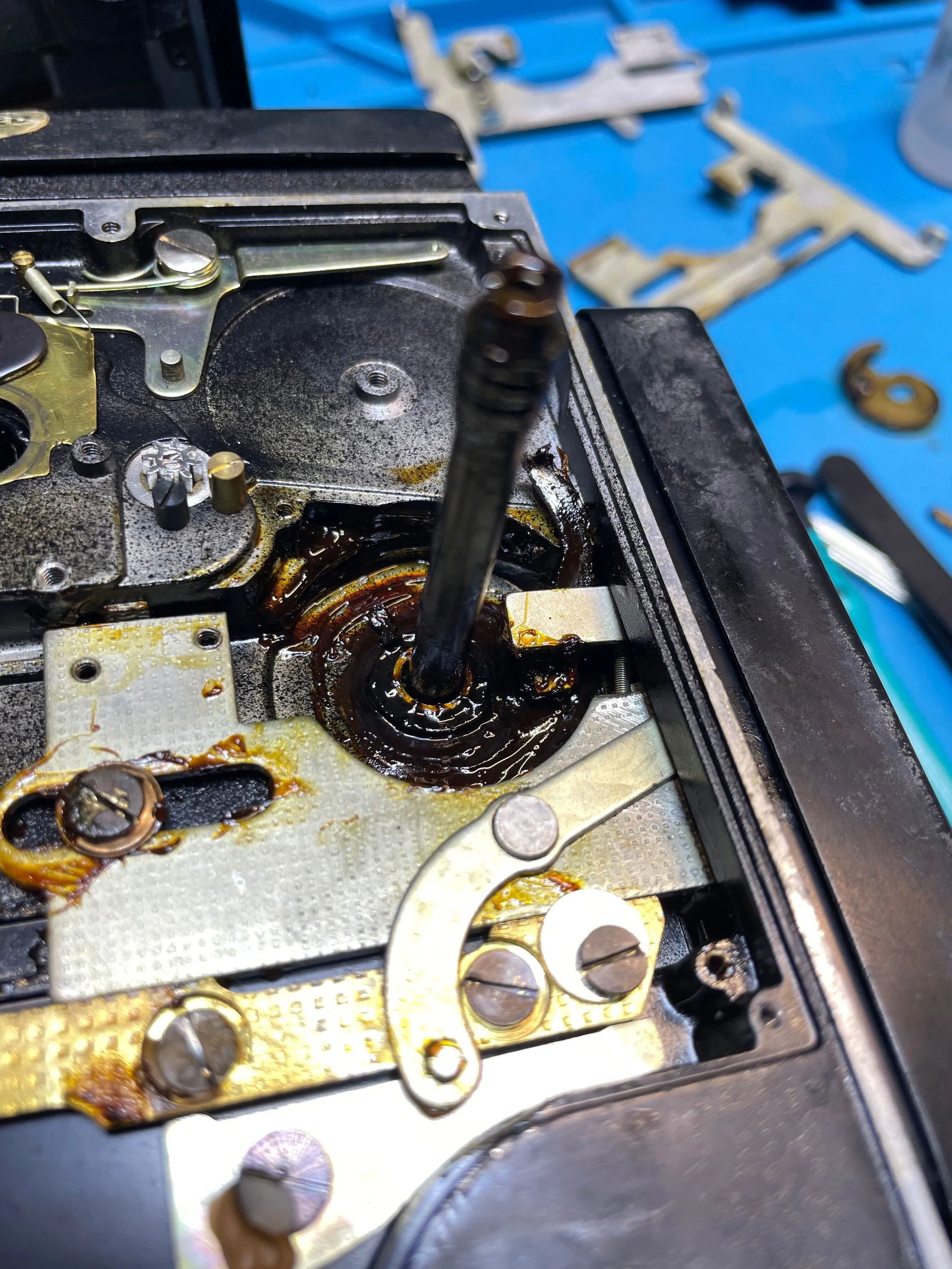
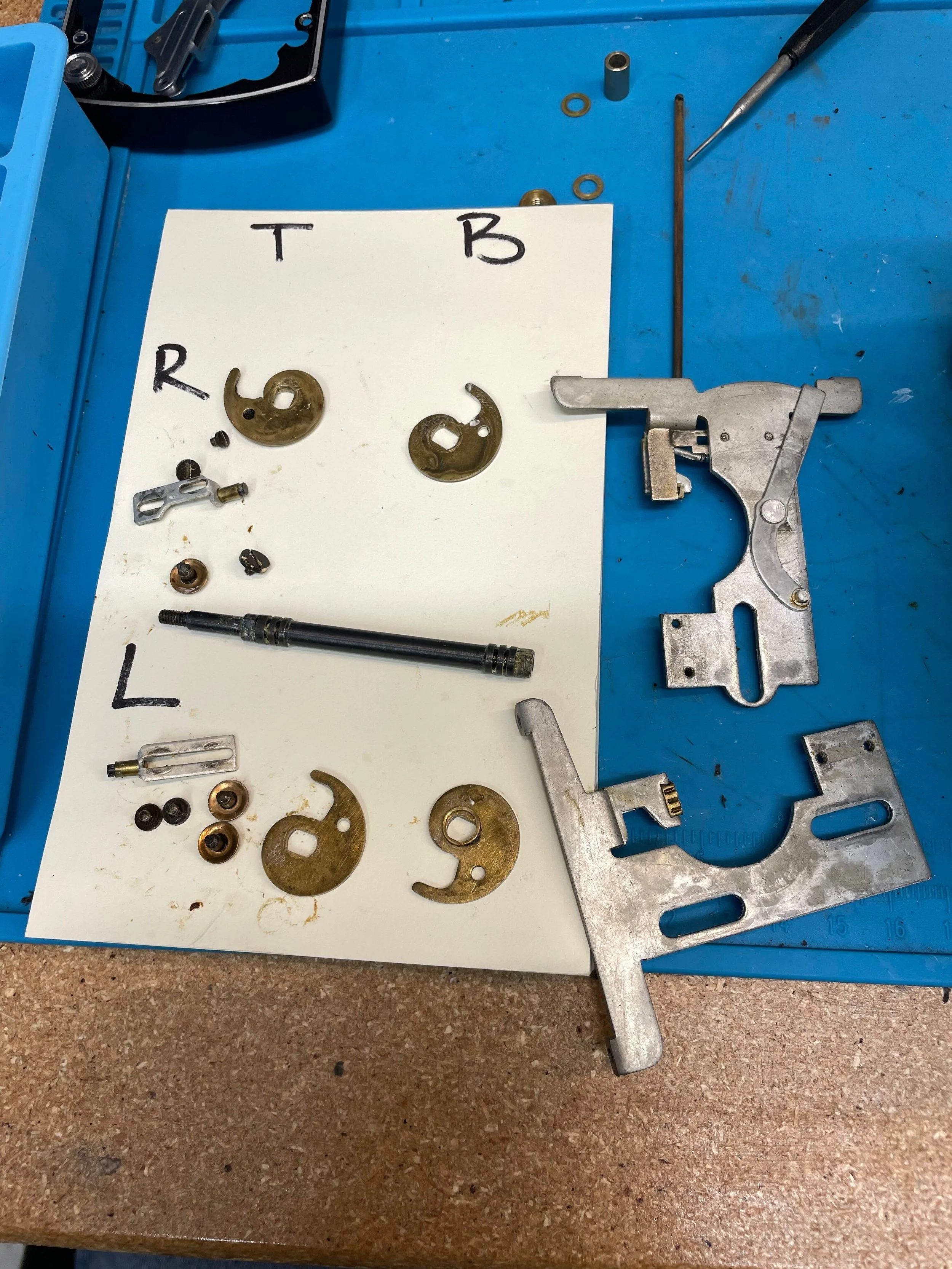
Technicians frequently see shutters running too slow, film advance systems becoming rough, and focus mechanisms becoming difficult to turn. These problems are usually not the result of catastrophic damage. Instead they are simply the result of lubricants that have aged far beyond their intended lifespan.
Many of the greases used in mid-century cameras were organic lubricants that were expected to last perhaps 15 to 20 years. After decades they lose their viscosity and can become dry, gummy, or sticky, which causes the delicate mechanisms in the camera to malfunction.
Precision Mechanisms Require Maintenance
A film camera operates very much like a miniature clockwork device. The shutter mechanism in particular depends on precisely timed movements. Even small amounts of contamination or friction can affect exposure accuracy.
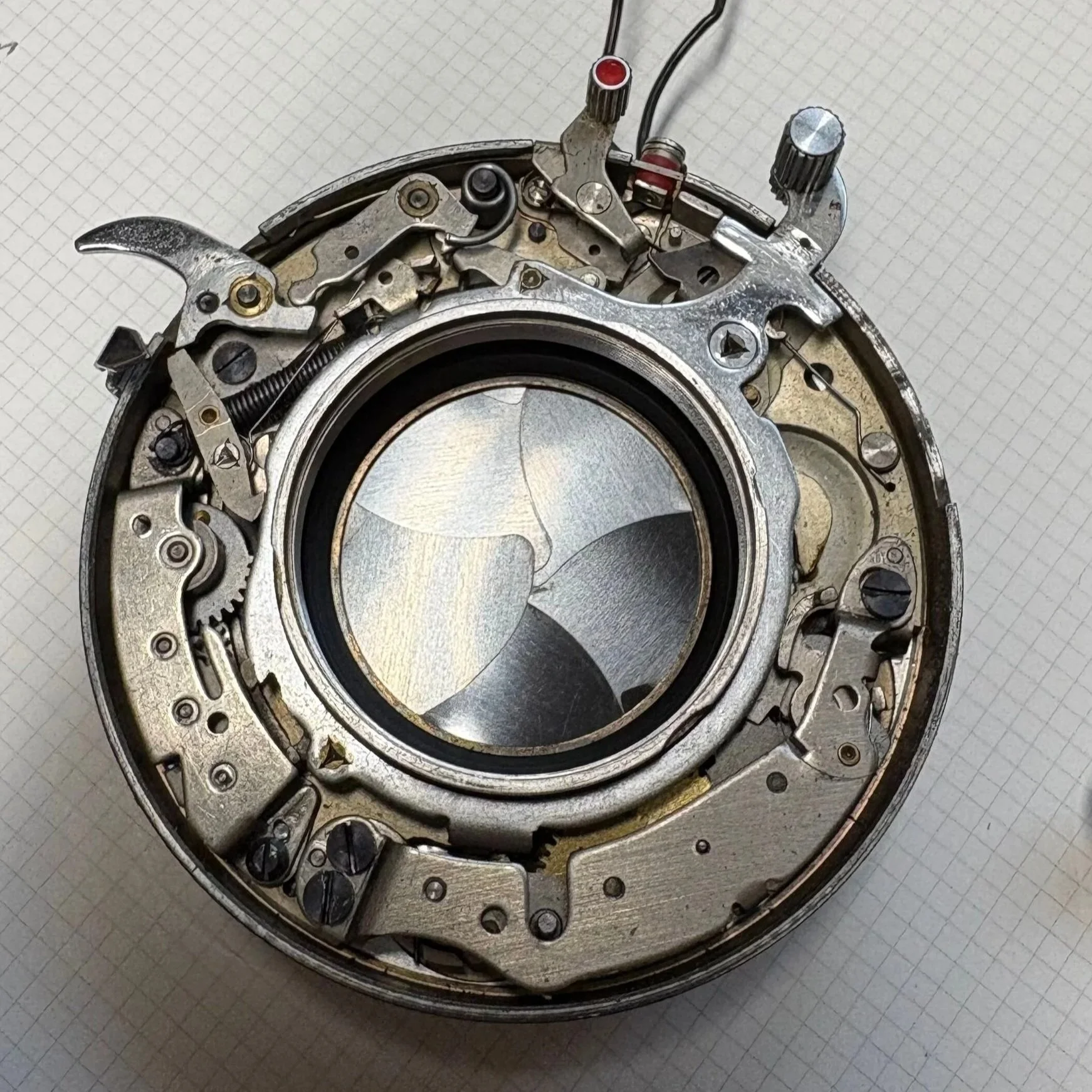
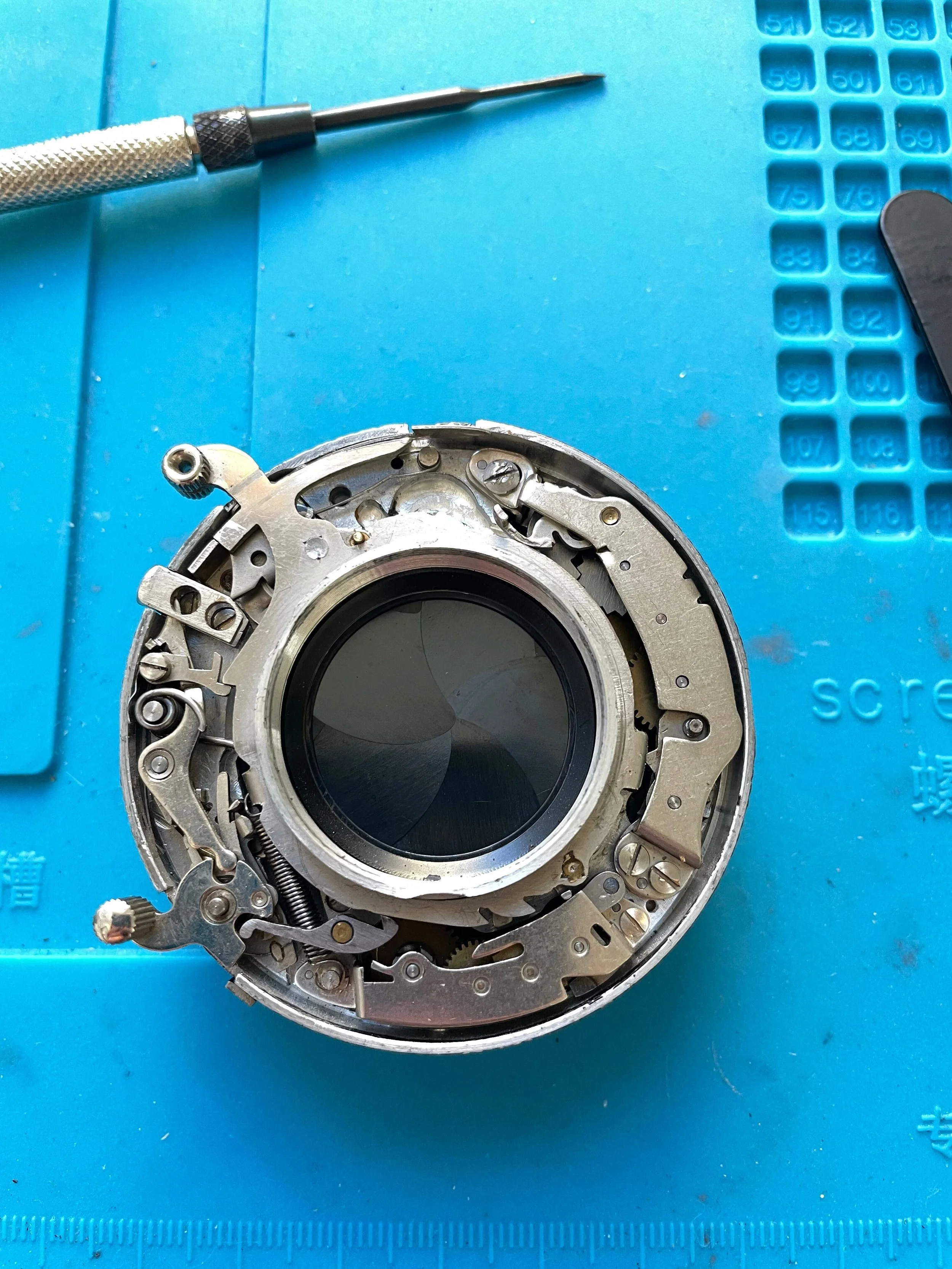
Seikosha-MX 80mm shutter, used on a Mamiya C3
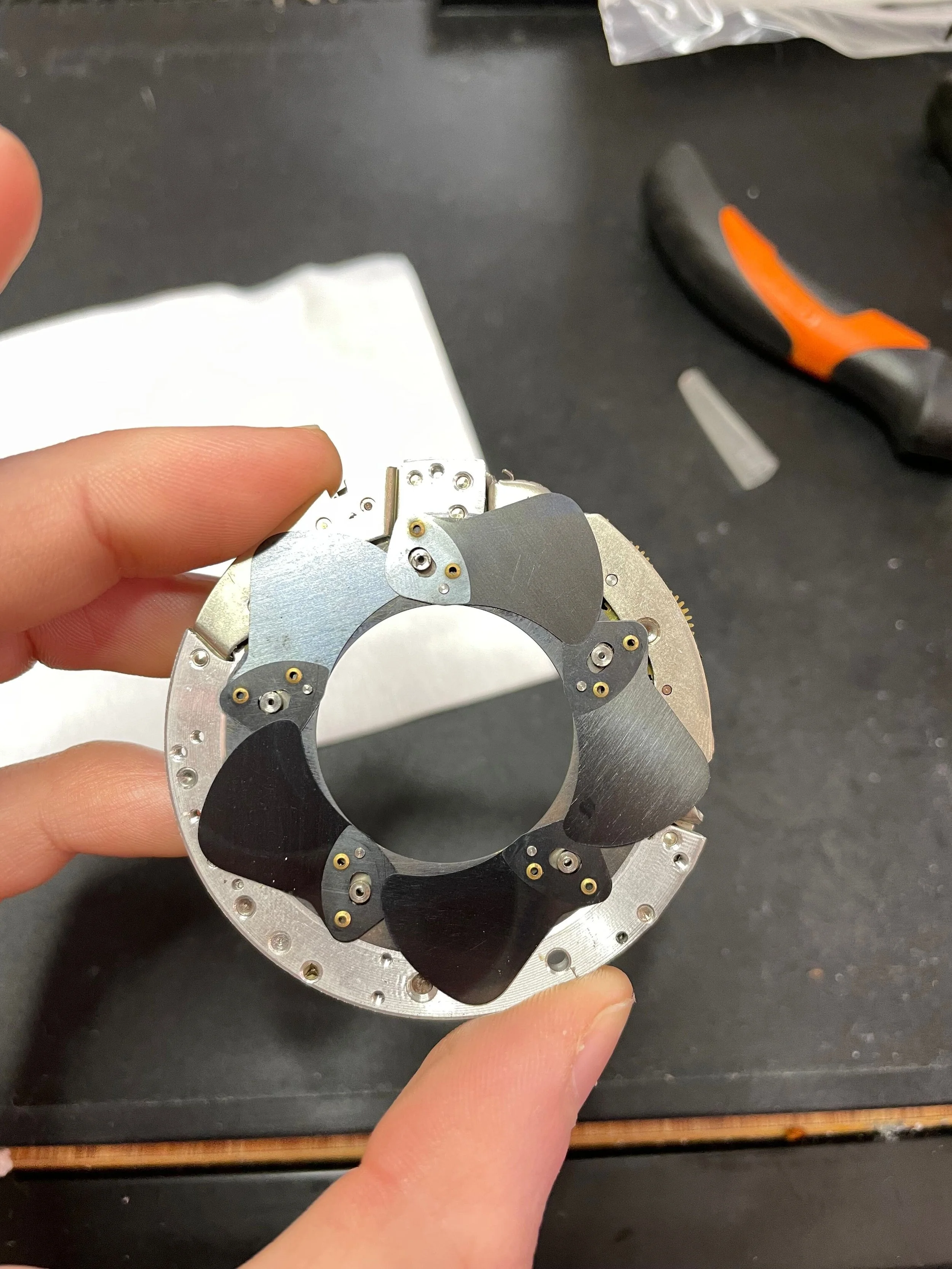
When dirt, dried grease, or debris accumulate inside a shutter mechanism, timing gears may slow down or operate inconsistently. This can cause shutter speeds to drift away from their intended values, which results in overexposed or underexposed photographs.
Because of this, regular maintenance is important even when a camera still appears to work. A camera might still produce images, but its mechanical timing may already be far outside factory specifications.
Professional servicing restores these mechanisms by removing old lubricants and contaminants, applying fresh lubrication, and adjusting components so they operate properly again.
The Reality of Vintage Cameras
A common misconception is that a camera purchased cheaply should not require significant service. Many photographers find cameras at flea markets, estate sales, or online marketplaces for relatively low prices. However, the purchase price of a vintage camera has little relation to the condition of its internal mechanisms.
Most cameras on the used market have gone decades without maintenance. Even cameras advertised as working may simply be functioning well enough to produce photographs while still operating far outside their intended tolerances.
Experienced technicians often emphasize that the lack of maintenance is the most common issue with older cameras. Many cameras currently in circulation have not received a full service since they were manufactured.
For this reason, servicing is often necessary not because the camera was poorly built, but because it has simply reached the age where maintenance is overdue.
Preventing Further Damage
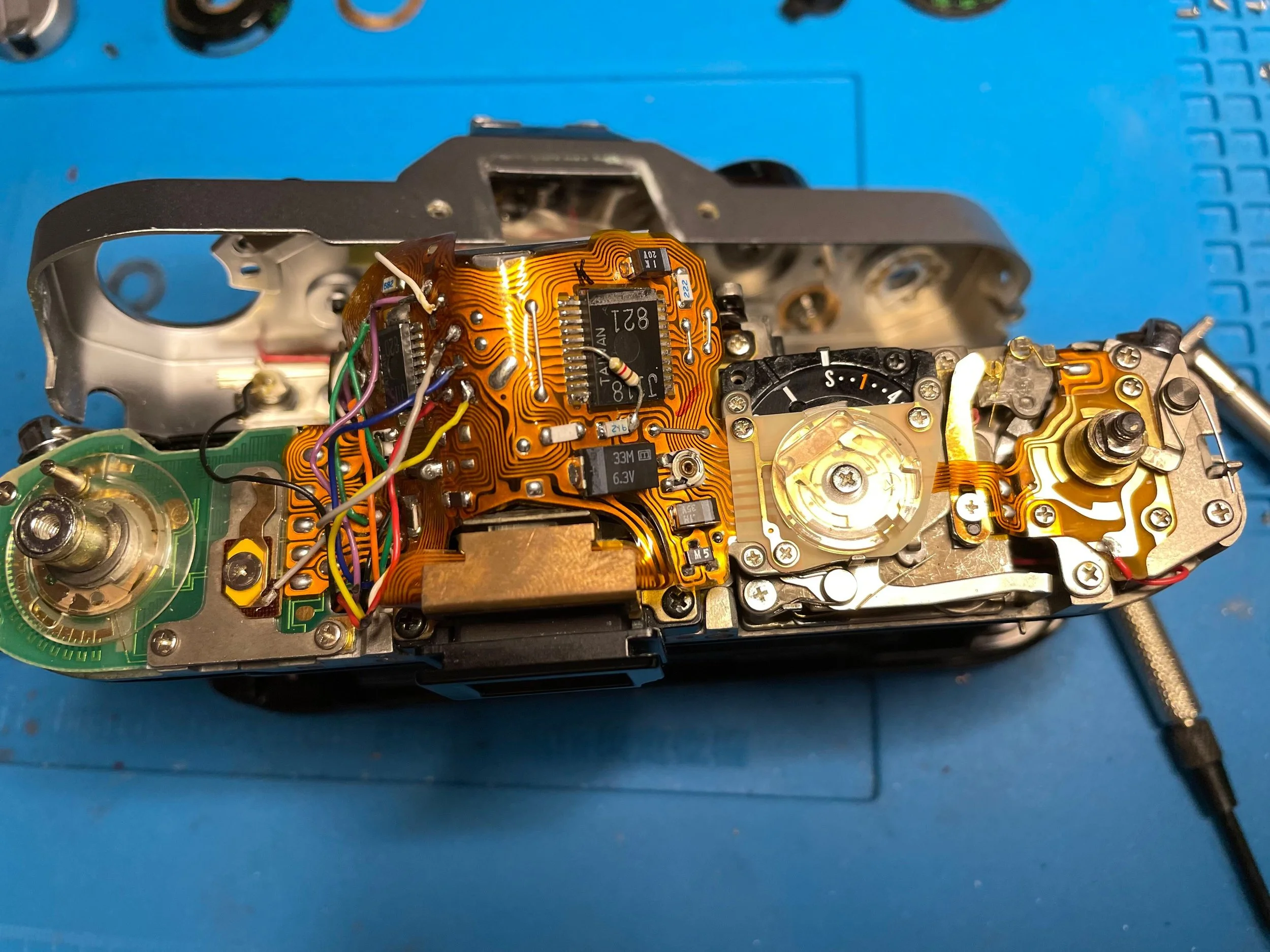
Regular servicing also helps prevent long term mechanical damage. When internal components operate with dried or contaminated lubricants, friction increases and parts begin to wear more quickly.
Replacing worn components in vintage cameras can be difficult or impossible because many parts are no longer manufactured. Preventative maintenance helps preserve the original mechanisms and reduces the likelihood of irreversible damage.
Many technicians compare this process to maintaining other mechanical machines. A camera may continue functioning for a long time without service, but operating it with degraded lubricants will gradually increase wear on its internal components.
Preserving Cameras for Future Use
Film cameras represent a remarkable period of mechanical engineering. Many were designed to be maintained and serviced throughout their lifespan. With proper care and occasional servicing, these cameras can continue operating reliably for many decades.
A proper service restores smooth mechanical operation, improves reliability, and ensures that the camera functions closer to its original specifications. This allows photographers to use these cameras with confidence and continue enjoying the process of shooting film.
In many cases, the cost of servicing may exceed the price originally paid for the camera. However, a well serviced camera can remain reliable for years, making it a worthwhile investment in preserving both the equipment and the craft of film photography.