
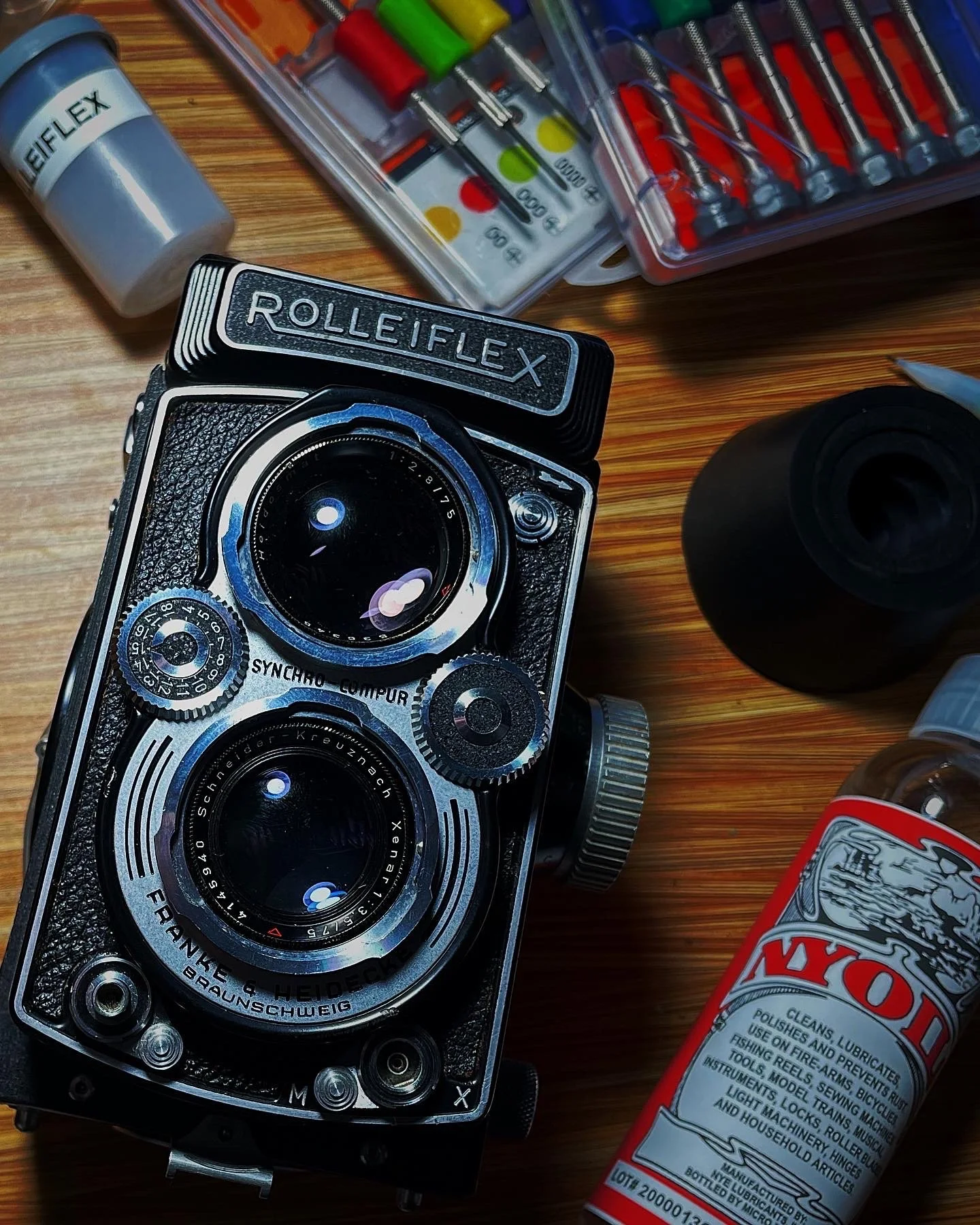
Vintage cameras are complex mechanical instruments. Many were built several decades ago and contain dozens, sometimes hundreds, of small mechanical components that must operate in precise coordination. Springs, gears, shutters, linkages, and timing mechanisms all depend on proper lubrication and adjustment to function correctly.
Over time, the original lubricants inside these cameras dry out, thicken, or migrate away from the areas where they were originally applied. Dust, oxidation, and normal wear also accumulate inside the mechanism. Even cameras that appear to be working can often be operating far outside their original tolerances.
A proper service is not simply “cleaning the outside” of the camera. It involves careful mechanical work intended to restore reliability, accuracy, and smooth operation. The process below outlines the general steps taken during a typical service.
The Service and Care Process
1. Initial Inspection and Assessment
Every camera begins with a careful inspection before any work is performed.
This stage involves:
Examining the camera’s exterior condition
Checking the shutter, film transport, and controls
Identifying visible wear, corrosion, or prior repair attempts
Verifying completeness of the camera and accessories
Basic functional tests are also performed to determine how the camera is currently operating. This helps identify obvious issues and provides a starting point for deeper inspection during disassembly.
Photos are taken to document the camera’s condition before servicing begins.
2. Diagnostic Evaluation
After the initial inspection, the camera is evaluated more closely to determine the full scope of work required.
This may include:
Checking shutter timing behavior
Testing film advance and frame spacing
Inspecting focus mechanisms and helicoids
Examining the condition of light seals and internal components
At this stage, the likely service needs are determined and a repair plan is established.
3. Careful Disassembly
Once service begins, the camera is methodically disassembled.
Vintage cameras were designed with layered mechanical assemblies, meaning many components must be removed in a precise order to reach internal mechanisms. Each screw, spring, and lever must be handled carefully and kept organized during this process.
Disassembly allows access to parts that have not been cleaned or lubricated in decades.
4. Cleaning of Mechanical Components
Old grease and debris are removed from internal components during cleaning.
Over time, lubricants can harden into thick residue that interferes with the movement of gears, shutters, and linkages. Removing this buildup is essential for restoring proper function.
Cleaning may involve:
Degreasing metal components
Removing hardened lubricants
Clearing dust and debris from mechanisms
Cleaning shutter assemblies where necessary
This step is critical because proper lubrication cannot be applied until the old material has been removed.
5. Lubrication
Once components are clean, fresh lubrication is applied in specific locations throughout the mechanism.
Different parts of the camera require different types of lubrication depending on their movement and load. The goal is to restore smooth mechanical operation while avoiding excess lubrication that could migrate to other areas.
Correct lubrication helps ensure that the camera operates consistently and reduces wear on internal parts.
6. Reassembly and Mechanical Adjustment
Reassembly is not simply the reverse of disassembly. As the camera is rebuilt, numerous adjustments must be made to bring the mechanisms back into proper alignment.
During this stage, adjustments may include:
Shutter timing and synchronization
Film advance and frame spacing
Tension and timing of springs and linkages
Focus calibration where applicable
Alignment of mechanical assemblies
Many of these adjustments interact with each other, meaning they must be refined gradually during the reassembly process.
7. Functional Testing
After the camera is fully reassembled, it undergoes functional testing.
This stage verifies that the mechanisms operate correctly and consistently. The camera is cycled repeatedly to ensure that the shutter, advance system, and controls behave as intended.
In many cases, test film may be run through the camera to confirm proper operation under real shooting conditions.
8. Final Cleaning and Inspection
Before the camera is returned, it receives a final cleaning and inspection.
This includes:
Cleaning exterior surfaces
Removing fingerprints and dust from handling during service
Verifying that controls operate smoothly
Performing a final operational check
At this stage the camera is prepared for return shipment.
Preserving Mechanical Cameras
Many vintage cameras were built to extremely high mechanical standards and were designed to be maintained over time. With proper servicing, these cameras can continue operating for many years and remain reliable tools for film photography.
Routine maintenance not only restores function but also helps preserve these mechanical devices so they can continue to be used and appreciated by future photographers.
Servicing is ultimately an investment in the longevity of the camera and in the continued use of traditional film equipment.